We have updated our Privacy Policy, click here for more information.
Thank you





Last week in London, First Derivative joined industry experts at RegTech 2026: Mastering AI-Driven Solutions, hosted by PJ Di Giammarino of RegRisk Legal Solutions. The message was clear: the era of simply implementing regulations is over. In today’s AI-powered world, firms must prove beyond doubt their governance and control.
The challenge? Delivering smarter, faster, safer, and more cost-effective RegTech that balances bold innovation with rock-solid control and trust.
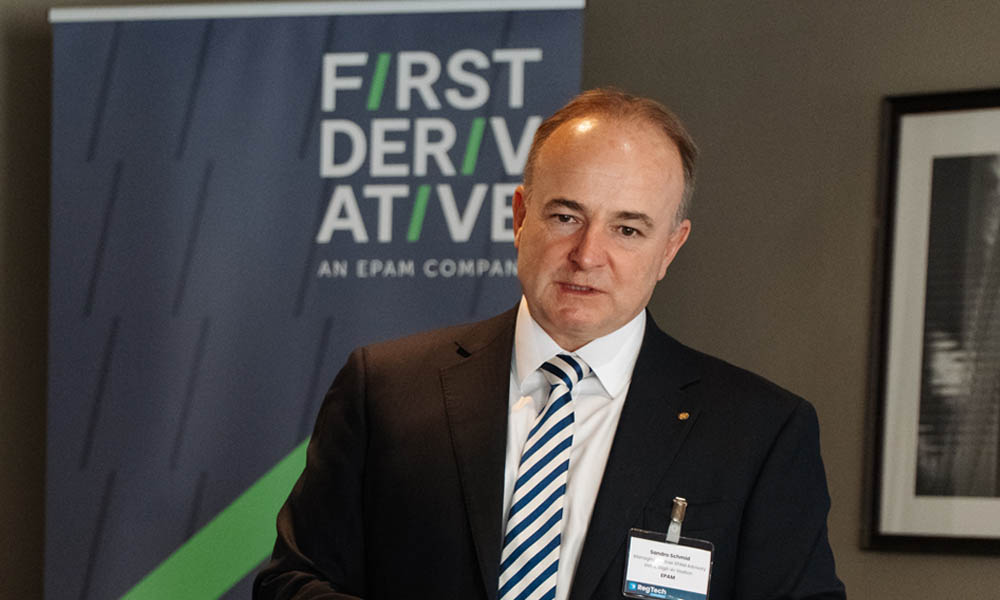
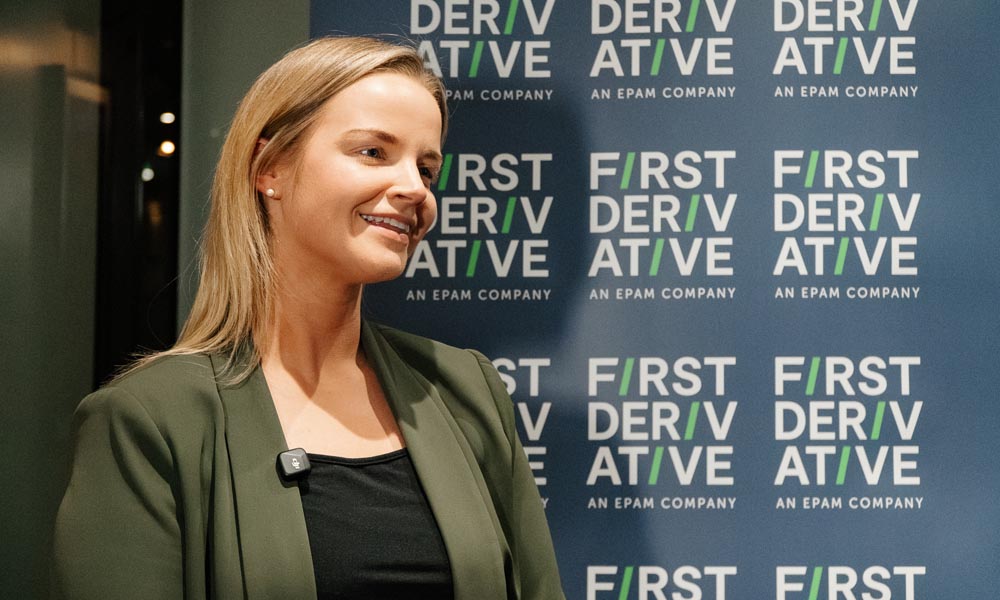
Our expert team; Grant Haley, Nicola Magennis, and EPAM’s Sandro Schmid took the stage to tackle the hottest topics: AI adoption, regulatory reporting and assurance, AI-driven risk and control self-assessments, financial crime management, market integrity, and the game-changing role of data in regulatory compliance. Across these discussions, a consistent set of themes emerged, shaping the key takeaways from the day.
The day’s big theme; it’s not about what you produce, but how you prove it. Firms are now judged on their ability to demonstrate, continuously and at scale that controls work in practice. The future belongs to those who can deliver real-time, testable control frameworks, leaving retrospective box-ticking behind.
The bar has been raised. Regulators are harnessing AI and analytics to scrutinize data at unprecedented scale. Consistency, accuracy, and traceability are non-negotiable, discrepancies will be found.
AI isn’t just emerging, it’s now the backbone of modern compliance. From surveillance to financial crime detection and regulatory reporting, AI is popping up everywhere. But with great power comes great responsibility: as adoption accelerates, the focus must shift from experimentation to control. Real risk often lurks beneath the surface, hidden in systems and workflows. Only firms with transparent, well-governed, and explainable AI models will withstand regulatory scrutiny. The consensus? It’s not enough to show results, you must show your inner workings.
Data was the golden thread running through every discussion. Whether it’s KYC, AML, market surveillance, or regulatory reporting, AI is only as strong as the data it’s built on. Fragmented or poor-quality data can sink even the best solutions. The industry now sees data as a regulatory asset, essential for demonstrating control and building trust. Without robust data foundations and clear lineage, firms risk undermining both their controls and their credibility.
One of the toughest challenges? Turning regulatory intent into operational reality. As technology races ahead, the real differentiator is collaboration across compliance, technology, and business teams working in lockstep to build solutions that are both innovative and regulator-ready.
Technology alone isn’t enough. Success demands strong fundamentals; clear ownership, solid data, and seamless teamwork to turn regulatory expectations into real-world explainable and defensible results.
“Point-in-time” compliance is out; continuous, real-time compliance is in. Much like Agile replaced Waterfall, adaptive frameworks powered by AI and modern data platforms are redefining the landscape. This isn’t just a tech upgrade, it’s a fundamental shift in how firms operate, govern, and stay accountable.
RegTech 2026 signals a new era; execution over experimentation. The opportunity is huge. Those who get the basics right across aligning data, technology, and regulatory defensibility will lead and take advantage of the next wave of AI-driven RegTech innovation. First Derivative and EPAM are excited about what the future brings and how we can support our clients on this unpredictable and challenging journey.