We have updated our Privacy Policy, click here for more information.
Thank you


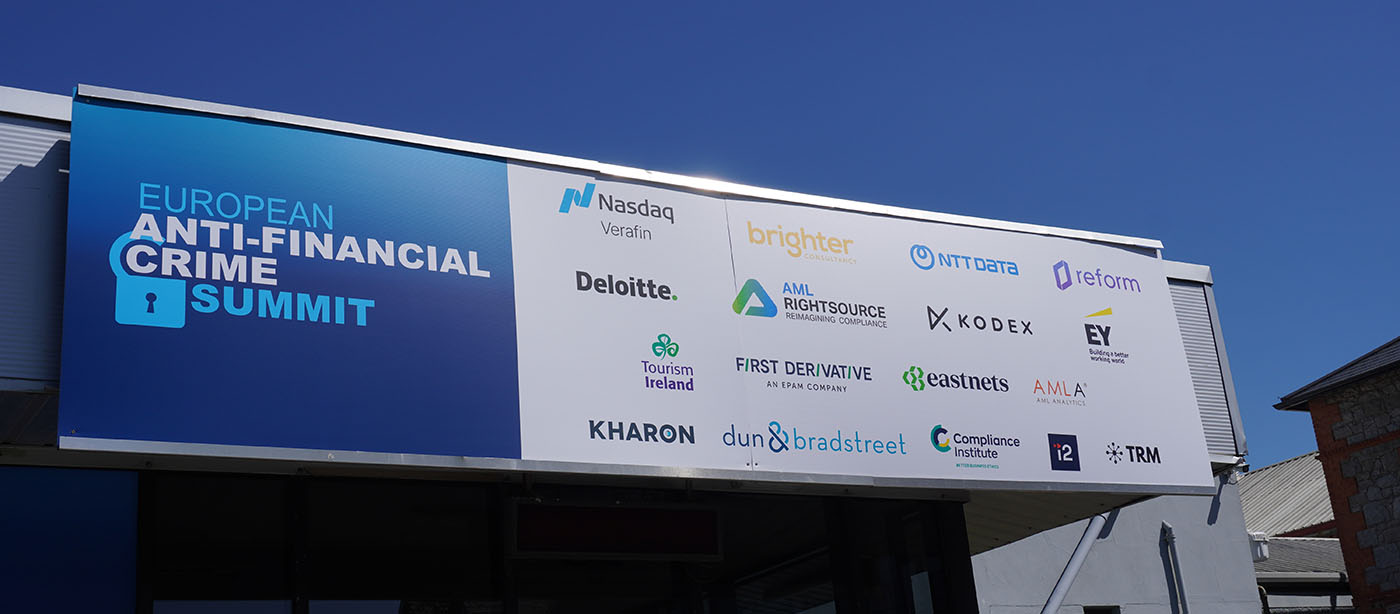

Day Zero at the European Anti-Financial Crime Summit 2026 hosted by the The Compliance Council set a compelling tone for the main event, bringing together industry leaders, service providers and regulators to discuss the rapidly evolving landscape of financial crime prevention. As a panellist, I had the opportunity to engage in thought-provoking discussions that highlighted several critical trends and challenges facing our sector.

A key theme was the growing importance of FATF evaluations at the board level. It’s clear that senior leadership must now play an active role in readiness with compliance moving beyond a technical function that sits in the second line to become a strategic priority for organisations.
Regulators are placing renewed emphasis on demonstratable effectiveness. The focus is shifting from simply having controls in place to being able to evidence tangible outcomes, such as improved detection and fairer customer treatment. This results-driven approach is reshaping compliance expectations across the industry.
With the Anti-Money Laundering Authority (AMLA) on the horizon, the message is clear: preparation must start now. Organisations are expected to align their frameworks and processes early to meet the forthcoming standards.
The direction of travel is unmistakable – toward intelligence-led, data-driven, and accountable financial crime prevention. This means not only adopting advanced analytics and AI, but also ensuring transparency and responsibility throughout the process.
As the afternoon progressed I joined four other Financial Crime experts for a panel discussion on AI, Data & the Future of Financial Crime Compliance through a panel discussion.
Our panel discussion repeatedly returned to the foundational importance of data. Many firms are still contending with fragmented legacy systems, making data quality, integration and governance the first challenge to address before AI can be scaled effectively. While AI is proving invaluable for triage, summarisation, and pattern detection, human judgement remains essential for accountability, risk appetite decisions, and regulatory interpretation.
Regulators are now looking beyond the existence of controls, focusing on whether firms can demonstrate real, measurable results. This outcome-based mindset is driving a significant shift in how we approach compliance and effectiveness.
As we move into the main event, it’s clear that the industry stands at a pivotal juncture. Our success will depend on our ability to integrate high-quality data, embrace intelligence-led strategies, and maintain robust human oversight. I look forward to building on these conversations as the summit continues.